Projects

Research projects

Recent work is intentionally summarized at a high level. Earlier projects include more context and links to the publications, tools, and public resources behind them.

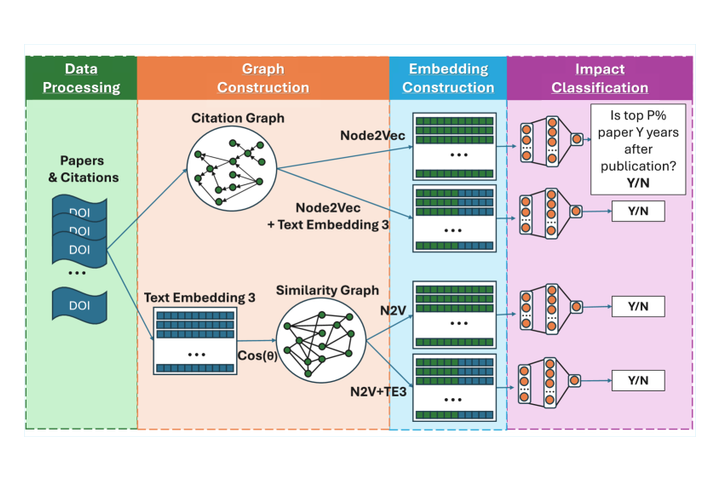
Graph and language-model representations used in an AI research pipeline.
Active research2026–present

Agentic AI for scientific and engineering design

Investigating how science-of-science methods can work with structured extraction pipelines, network analysis, embedding-based search, and domain knowledge to identify promising scientific and engineering opportunities. The work connects evidence across publications, materials, measurements, and device concepts while keeping early-stage technical directions deliberately high level.

Agentic AIScience of scienceMaterialsDevices
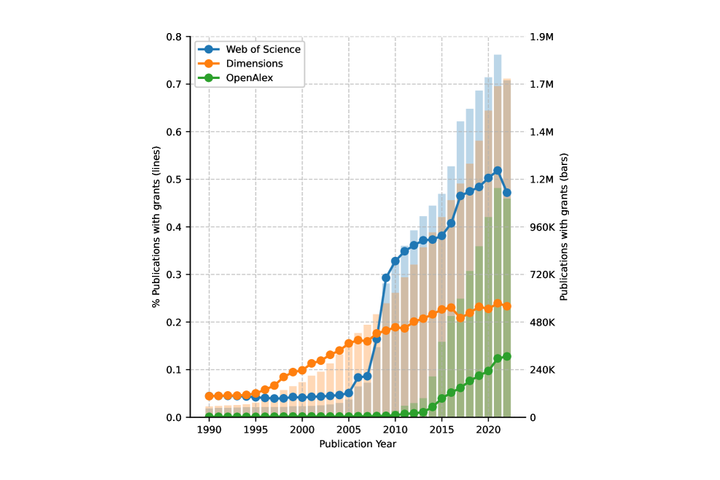
Pipeline linking global science funding to research publications.
Active research2025–present

Mapping how science is funded

Building large-scale, validated links between funding acknowledgments, organizations, and publications. The broader research program examines how public, philanthropic, and corporate support shapes scientific directions, researcher trajectories, and the geography of knowledge production.

Science fundingData infrastructureEntity resolution
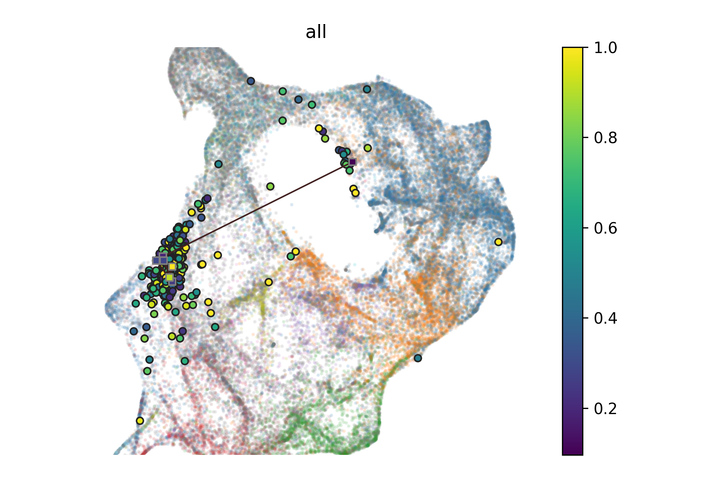
Embedding map representing technical designs and performance signals.
Active research2025–present

Technology capability maps

Developing embedding models that represent design choices and technical attributes extracted from papers and patents. The research examines whether interpretable directions in these spaces align with measurable progress, expose important tradeoffs, and help predict how technological capabilities evolve across materials and device platforms.
Technology forecastingEmbeddingsMaterialsDesign spaces
Helios Web network visualization mark.
Active open-source project2021–present

Helios Web

A browser-first platform for interactive graph visualization and embedding exploration. The current release combines a WebGPU renderer with WebGL2 fallback and a WebAssembly graph store, supporting real-time layouts and analysis at million-node scale across browsers, notebooks, desktop workflows, and agentic tools.

Network visualizationWebGPUWebAssemblyEmbeddings
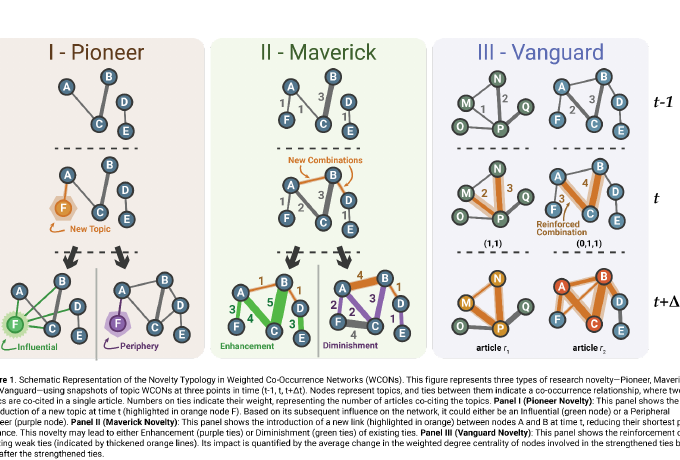
Schematic of scientific novelty through changing topic relationships.
Active research2025–present

Scientific trajectories and innovation

Developing network and embedding methods to study how researchers and fields change direction, recombine ideas, and approach new frontiers. The work relates paper trajectories to collaboration structure, scientific impact, disruption, and the conditions that help new directions emerge.

EmbeddingsResearch careersNoveltyCollaboration
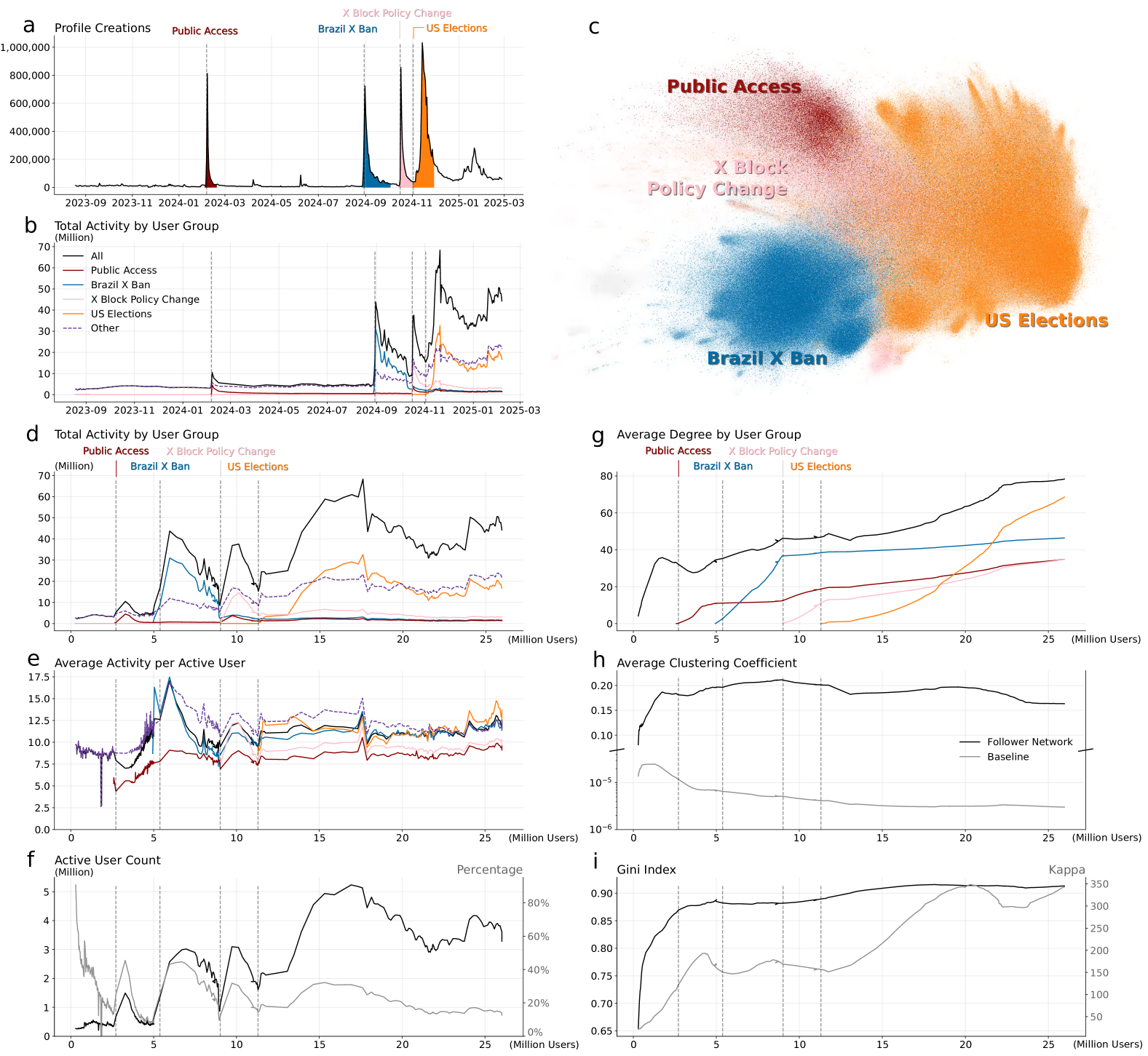
Network structure and growth patterns on Bluesky.
Active research2024–present

Computational social systems

Studying coordinated behavior, information integrity, and public discourse across emerging social platforms. Current work combines network structure, text embeddings, topic models, and human validation to understand how collective behavior forms and changes online.

Social mediaCoordinationInformation integrityPublic health
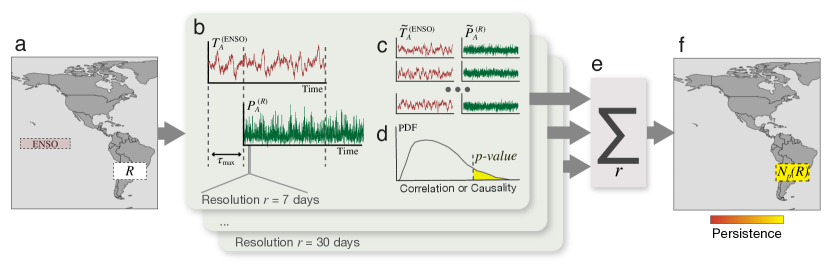
Climate network used to detect statistically significant teleconnections.
Published2019–2021

Climate teleconnections

Developed a network-based method for detecting statistically significant long-range relationships between temperature and precipitation anomalies. The project used Granger causality to reveal climate teleconnections while explicitly controlling for indirect effects.

Climate networksGranger causalityComplex systems
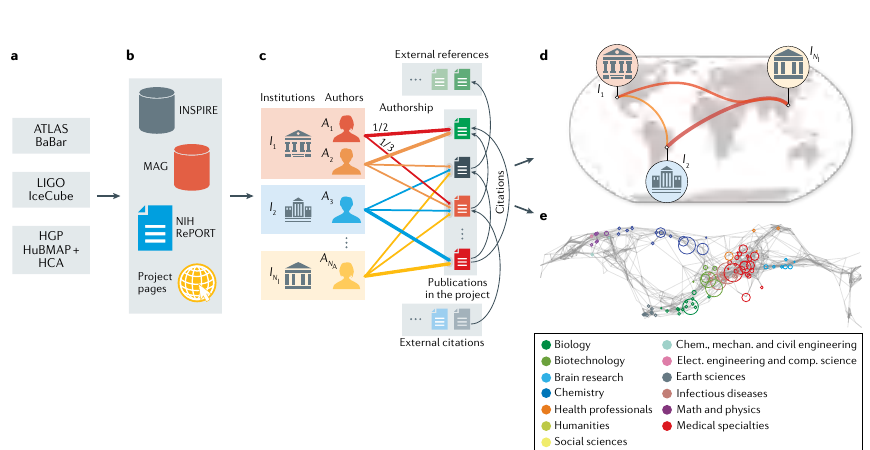
Collaboration and institution maps for big science projects.
Published · Open data and software2020–2022

Visualizing big science projects

Mapped the changing scale, collaboration structure, funding, and topical reach of landmark physics, astronomy, and biomedical research programs. The public project includes reproducible datasets, processing code, and interactive institution and science maps.

Science of scienceCollaboration networksInteractive visualization
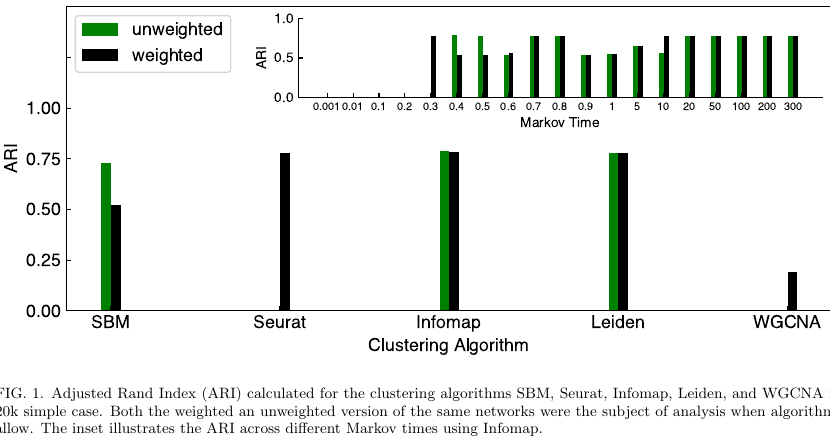
Comparison of network clustering methods for robust cell-type identification.
Interdisciplinary research2017–2026

Biomedical and health applications of network science

Applied network science, machine learning, and scientific-data pipelines to problems in single-cell genomics, wound-healing materials, neuroscience, and biological networks. The work ranges from robust cell-type identification and literature-scale synthesis to reproducible cloud workflows, showing how shared computational representations can support very different biomedical questions.

Biomedical dataSingle-cell genomicsNeuroscienceScientific literature
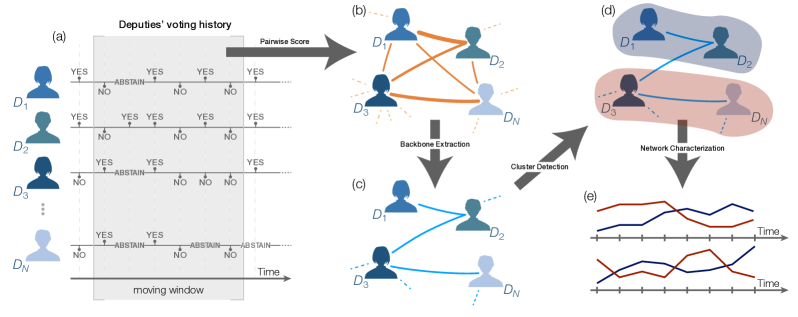
Interactive network analysis for public-interest and political data.
Deployed research infrastructure2019–2025

Social media network analysis at OSoMe

Contributed network-analysis and real-time visualization infrastructure for studying online information diffusion and coordinated activity. This work connected research pipelines to accessible browser tools used by scientists, journalists, and public-interest investigators.

Computational social scienceCoordinationVisualization
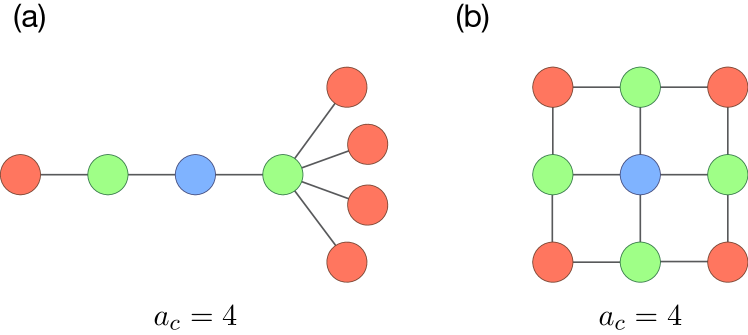
Concentric symmetry measurements for complex networks.
Published methods and software2006–2019

Geometry, symmetry, and dimension in complex networks

Developed multiscale measurements for describing nodes and networks through concentric structure, accessibility, symmetry, and local dimension. The methods were applied to collaboration, text, biological, urban, transportation, and infrastructure networks and released with supporting software.

Complex networksGeometrySymmetryAccessibility
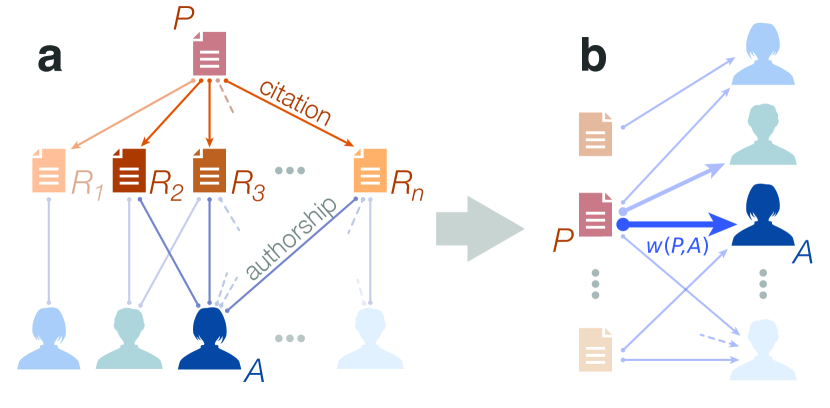
Citation trajectories showing bursts of attention over time.
Published research2018–2024

Scientific careers, citations, and community structure

Studied how recent attention predicts citation bursts, how collaboration patterns relate to productivity and visibility, and how stable scientific communities remain as citation networks evolve. The work introduced both empirical findings and new measures of community robustness.

Science of scienceCitationsCommunitiesResearch careers